
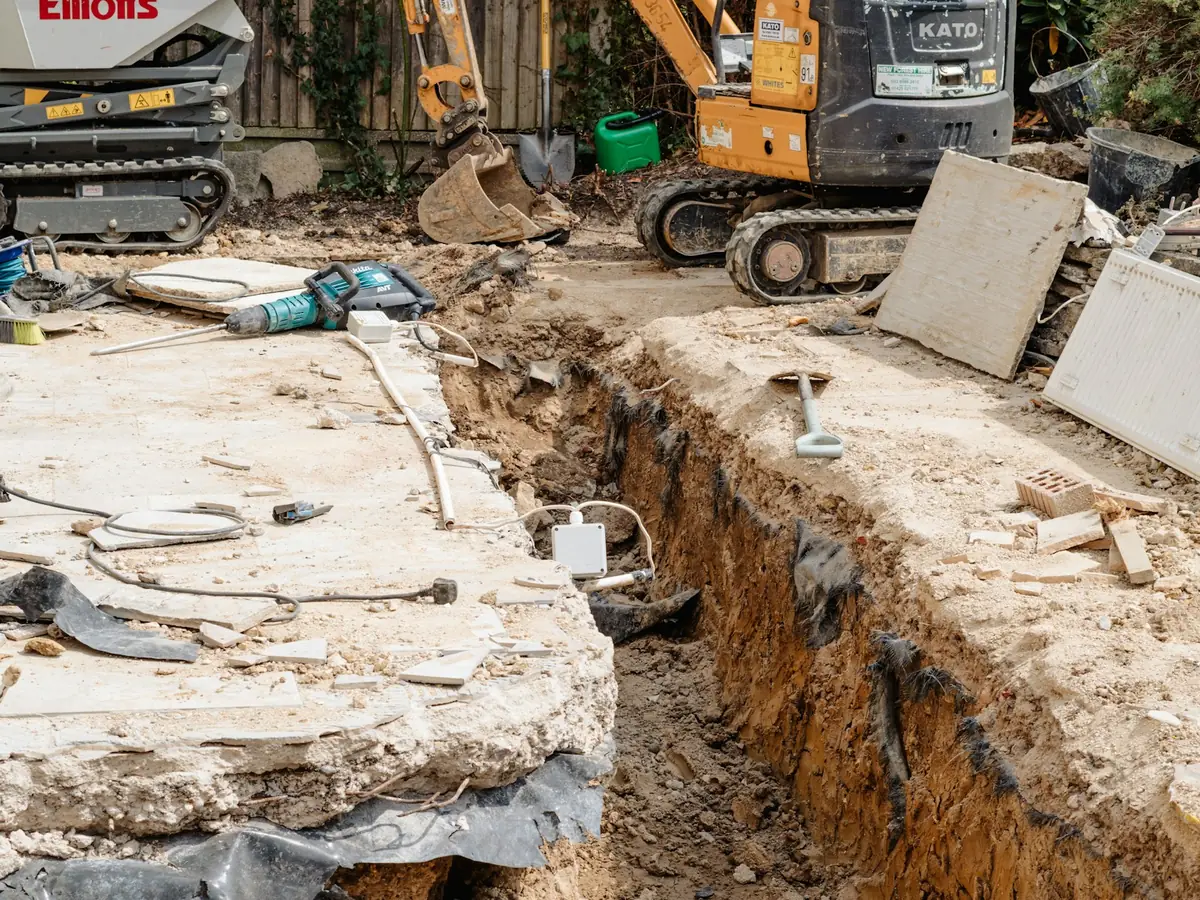
Signs of a damaged sewer line
- The main line has needed drain cleaning more than once in a year
- Toilets gurgle or bubble when a tub drains or the washing machine empties
- Water backs up into the lowest shower, tub or basement floor drain
- A sewage smell outside, between the house and the street
- A strip of lawn over the line that stays wet or grows greener than the rest
- A depression or sinkhole forming over the path of the pipe
- Pieces of root brought back on the drain cable after cleaning
What causes sewer lines to fail
Root intrusion
Roots find the moisture at pipe joints, grow through any gap, then fill the inside of the pipe. Older clay and cast iron lines with many joints are most vulnerable, but roots can enter PVC at a bad joint too.
Sags (bellies)
A section of pipe that has settled lower than the pipe around it holds water and waste instead of draining. Toilet paper and grease collect there, and clogs keep coming back in the same spot.
Cracks, offsets and collapse
Ground movement, heavy vehicles over the line, and age crack pipe or shift joints out of line. Cast iron rusts through along its bottom; old fiber pipe (sometimes called Orangeburg) deforms and collapses.
Grease buildup
Years of kitchen grease narrow the pipe until it clogs. This one is often fixed with hydro jetting rather than digging.
How sewer line repair works
- Clear the line so water can flow and the camera can pass.
- Camera inspection. A camera on a push cable runs from a cleanout to the public sewer or septic tank. A locator on the surface marks where the camera head is and how deep the pipe is.
- Decide the repair. You see the footage and the options.
- Make the repair. Depending on the line and the yard, options include:
- Spot repair: digging down to one broken or root-infested section and replacing just that piece.
- Full replacement by trench: replacing the whole lateral with new PVC, set at a steady slope.
- Trenchless methods: pipe bursting or lining the existing pipe can reduce digging under driveways, landscaping or trees. Whether they suit your line depends on its condition, material and layout.
- Permit and inspection. Sewer replacement is permitted work, and the new pipe is inspected before it's covered.
- Final camera check and backfill. The new line is flowed and checked, then the trench is backfilled and compacted.
How Canton's red clay and hills affect sewer lines
Most of Cherokee County sits on Piedmont soils with a dense red clay subsoil. Clay swells when wet and shrinks as it dries, and that seasonal movement works old pipe joints open over the years.
Once a joint gaps, tree roots move in. This is why older lines around Canton, especially clay and cast iron laterals under mature trees, are prone to root clogs that return a few months after cleaning.
Hills add a second problem. Homes set well above or below the street often have long laterals, and a long run across sloped, filled ground is more likely to have a section that has settled into a belly.
Digging is also harder in Canton's clay and rock, which affects the cost of an open-trench repair. A camera inspection with depth readings before you commit to a repair method is worth it here.
Who owns the sewer line?
On public sewer, the homeowner is generally responsible for the lateral from the house to where it connects to the public main or the tap at the property line. The utility handles the public main.
If a camera shows the problem is in the public portion, contact your sewer provider, either the City of Canton or the Cherokee County Water and Sewerage Authority, depending on your address. On septic, the line from the house to the tank is yours, and so is the tank.
What affects the cost of sewer line repair
- Spot repair vs. full replacement. One bad section is far less work than the entire lateral.
- Depth and length. Deeper and longer lines mean more digging.
- What's on top. Driveways, patios, walkways, mature trees and landscaping add restoration or push toward trenchless methods.
- Soil and rock. Dense clay and rock slow excavation.
- Method. Trenchless methods can cost more for the pipe work and less for restoration.
- Permit, inspection and cleanout installation if there's no cleanout yet.
When a sewer line problem is an emergency
- Sewage is coming up into the house through a drain
- No drain in the house works
- Sewage is surfacing in the yard
Stop all water use and call our 24/7 emergency plumber. The line can usually be opened that day so the house is usable; the permanent repair follows once the camera shows what failed.
After a sewer line repair
New PVC set at proper slope with no root entry points shouldn't need routine cleaning. If only a spot repair was made on an older line, plan on a periodic camera check, since other old joints may fail later.
Keep tree planting away from the line's path. Sewer work is one of the larger jobs we take on as a Canton, GA plumbing company. Older neighborhoods like Downtown Canton see it most often.
Sewer line questions
How do I know if I need sewer line repair or just drain cleaning?
If the main line clogs once and stays clear afterward, cleaning was enough. If it clogs again within months, or roots come back on the cable, the pipe has a defect, and a camera inspection will show whether repair is needed.
Can roots be removed without replacing the pipe?
Yes, cutting or jetting clears roots for a while, but they grow back through the same gap. A permanent fix seals the joint, either by replacing that section or lining the pipe.
Is trenchless sewer repair always possible?
No. It depends on the pipe's condition, size, layout and access.
Badly collapsed pipe, severe bellies and some layouts need excavation. A camera inspection decides it.
Does homeowner's insurance cover sewer line repair?
Standard policies often exclude sewer line wear and root damage, but some carriers offer service line coverage as an add-on. Check your policy for "service line" or "sewer backup" coverage.