
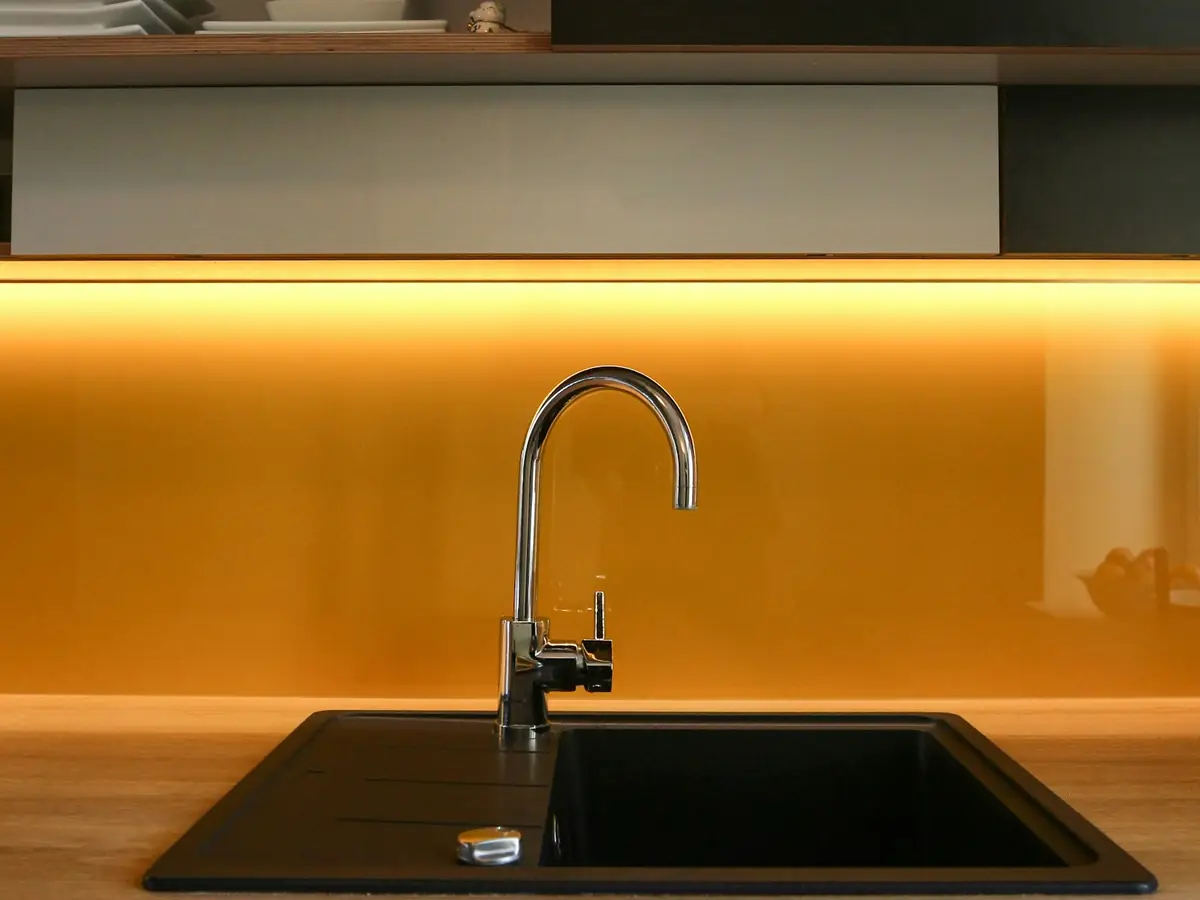
Signs a faucet or fixture needs repair
- A faucet that drips from the spout after it's turned off
- Water leaking from around the handle or the base of the faucet
- Water pooling in the cabinet under the sink
- A shower that keeps dripping, or that runs too hot or cold, or swings temperature when a toilet flushes
- A tub spout that keeps running when the shower diverter is pulled up
- Low flow from one faucet only (usually a clogged aerator or cartridge)
- A handle that's stiff, loose or spins without stopping the water
- An outdoor spigot that leaks at the handle, or water inside the wall behind it
What causes faucets and fixtures to leak
Inside every faucet is a part that opens and closes the water: a rubber washer on older compression faucets, or a cartridge or ceramic disc on newer ones. Over the years, rubber seals harden, O-rings wear and mineral deposits score the surfaces that are supposed to seal.
Shower valves work the same way, with the added job of mixing hot and cold water safely. Leaks under the sink are usually at the supply lines, the shutoff valves or the drain trap rather than the faucet itself.
How faucet and fixture repair is done
Faucet repair
The plumber shuts off the water, identifies the brand and model, and replaces the worn cartridge, stem, washer or O-rings with matching parts. The aerator is cleaned or replaced, and the faucet is tested for drips and leaks at the base.
Shower and tub valve repair
The handle and trim come off, the water is shut off, and the valve cartridge is replaced. On pressure-balancing valves, this also restores proper temperature control. If the valve body itself is failing or obsolete, replacing it means opening the wall behind the shower, ideally from an adjacent closet or access panel.
Faucet and sink installation
The old faucet is removed, the sink surface is cleaned, and the new faucet is installed with new supply lines. Shutoff valves are replaced if they're stiff or corroded. For a new sink, the drain and trap are connected and tested too.
Why outdoor spigots split in Canton's occasional hard freezes
Most Canton homes built in recent decades have frost-free outdoor spigots, also called sillcocks. The valve sits several inches inside the wall where it stays warm, and the water drains out of the long stem when the spigot is closed.
They work well, with one catch: if a garden hose is left attached, water can't drain out of the stem. In a hard freeze, like the Christmas 2022 cold snap that burst pipes across metro Atlanta, that trapped water freezes and splits the pipe inside the wall.
You often don't find out until spring, when you turn on the hose and water pours into the basement, crawlspace or wall cavity. Disconnect hoses before the first freeze.
If a spigot leaks inside the wall when turned on, shut it off and have the sillcock replaced. Older homes with standard, non-frost-free spigots need an inside shutoff valve closed for winter.
What affects the cost of faucet and fixture work
- Repair vs. replacement. A cartridge is a small repair; a new faucet means the cost of the fixture plus installation.
- Parts availability. Common brands have parts on hand; discontinued builder-grade models may need replacement instead.
- Access. Tight vanity cabinets, undermount sinks and shower valves behind tile take longer.
- Seized shutoff valves that need replacing before the work can be done.
- Wall opening. Shower valve or sillcock replacement sometimes means cutting drywall or, more rarely, tile.
- The fixture you choose, from basic to designer models.
When a fixture leak is an emergency
- A faucet or shower won't shut off at all and there are no shutoff valves
- A supply line under a sink has burst and is spraying
- A split outdoor spigot is leaking inside the wall or into the basement
Shut the valves under the sink, or the main if there are none. Then call our emergency plumbing line. A dripping faucet can be scheduled, though at one drip per second it wastes thousands of gallons a year.
After fixture repair
Check under the sink a day later for any moisture at the new connections. Clean aerators every few months if you notice reduced flow.
If several fixtures in the house are wearing out at once, which is common in homes built in the same era, replacing them together saves on repeat visits. Fixture work is everyday work for us as a local plumber in Canton, GA. If low flow is happening at every faucet rather than one, see water pressure repair.
Faucet and fixture questions
Is it worth repairing a dripping faucet?
Usually yes, if the faucet is in good shape and parts are available. A new cartridge costs much less than a new faucet. If the finish is worn, the body is corroded or parts are discontinued, replacement makes more sense.
Why does my shower get hot when someone flushes a toilet?
The toilet draws cold water away, and an older shower valve without pressure balancing can't compensate. Replacing the valve with a pressure-balancing or thermostatic valve prevents the temperature swings.
Can you install a faucet I bought myself?
Yes. Let us know the brand and model when you book so the right supply lines and fittings come with the plumber.
How do I know if my outdoor spigot is frost-free?
Frost-free sillcocks usually have a longer body that extends into the wall, and often a small vacuum breaker cap on top. If you're unsure, check for an indoor shutoff valve on the line to the spigot.